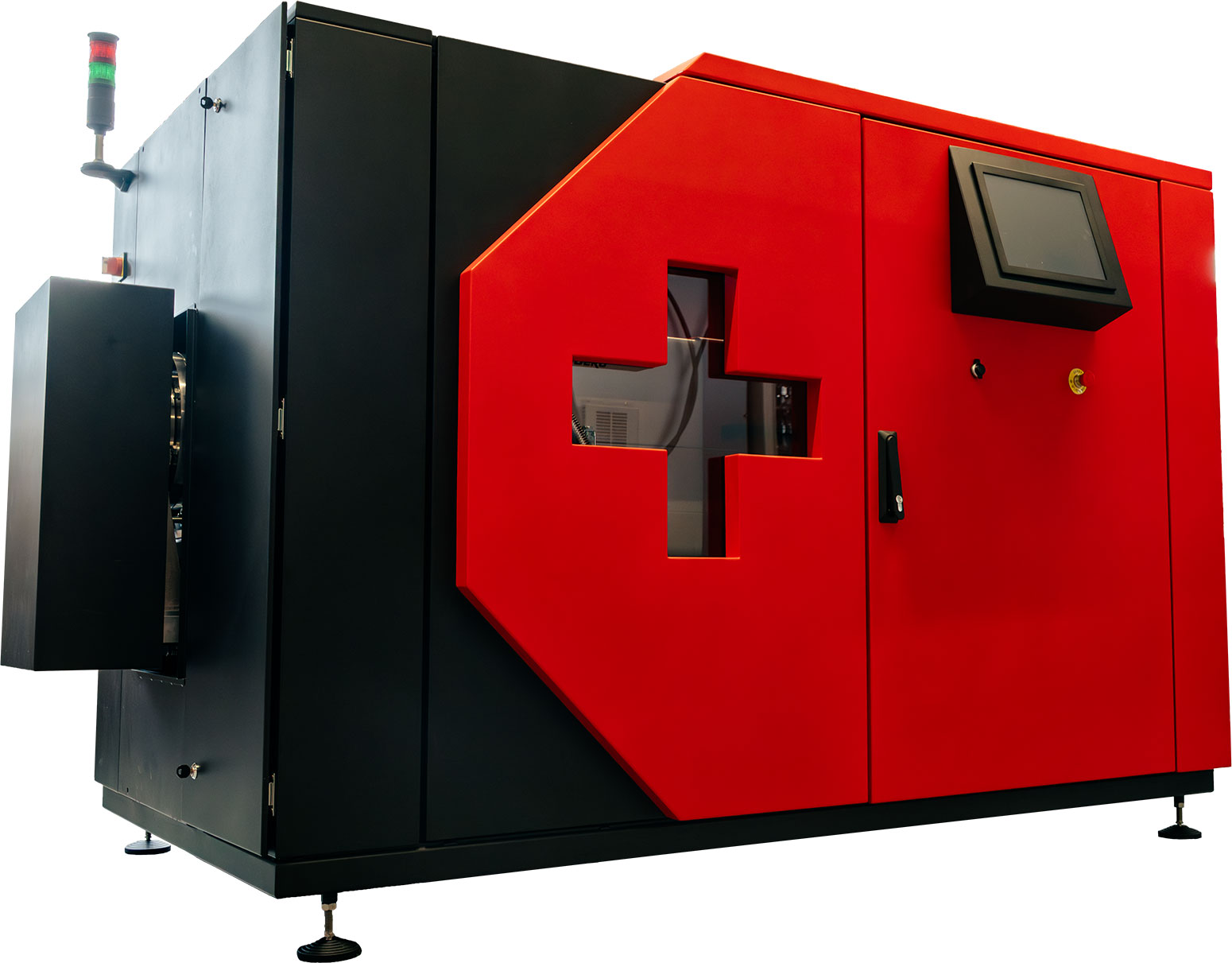
When pressures drop below 10⁻⁹ mbar, every component, interface and control parameter matters. At that level, standard equipment quickly reaches their limits. This is why many industrial and research applications now rely on an ultra high vacuum custom system, designed around a specific process rather than adapted afterward.
Ultra-high vacuum environments are unforgiving. Outgassing, material selection, surface finishes, sealing strategies and thermal behavior all influence the final pressure and long-term stability. Off-the-shelf systems are usually designed for generic use cases. They work well within predefined boundaries, but they rarely align perfectly with demanding industrial processes or advanced R&D protocols.
A custom ultra-high vacuum system starts from the application itself. The geometry of the chamber is defined by the process constraints, not by catalogue availability. Pumping architecture is selected according to gas loads, cycle times and contamination risks. Feedthroughs, motion systems and heating elements are integrated from the earliest design phase, which avoids compromises later in the project.
Another decisive factor is process integration. Many applications require more than vacuum generation alone. Thin-film deposition, thermal treatment, mechanical testing or sample manipulation under vacuum impose tight coordination between mechanical design and automation. A customized system allows these functions to coexist within a single, coherent architecture.
Choosing a custom solution means placing significant trust in the engineering partner. This trust is built on experience, technical depth and the ability to manage complex projects from concept to commissioning. Plasmadiam has developed this expertise over more than twenty years of system construction in Switzerland, working at the interface between vacuum technology, automation and industrial processes.
What distinguishes Plasmadiam is not only its knowledge of ultra-high vacuum principles, but its capacity to translate application requirements into robust technical solutions. Each project begins with a detailed understanding of your process, constraints and performance targets.
Our engineering team brings together mechanical design, electrical engineering and automation under one roof. This integrated structure avoids the fragmentation often seen in multi-supplier projects. Vacuum technicians, PLC specialists and software engineers work in close coordination, which results in systems that are coherent, reliable and easier to operate.
Finally, all our custom ultra high vacuum systems are built and tested in-house.
Designing an ultra-high vacuum custom system is an iterative process. It begins with requirements analysis and continues through detailed engineering, assembly, testing and long-term support. At Plasmadiam, the engineering scope covers the entire lifecycle of the system, from small control architectures to complete turnkey automation solutions.
On the mechanical side, chamber design and component integration are driven by vacuum compatibility and process efficiency. Materials are selected for low outgassing and thermal stability. Interfaces are optimized to minimize dead volumes and contamination risks. When movement under vacuum is required, motion systems are designed to operate smoothly without compromising pressure levels.
Plasmadiam’s expertise extends to advanced control functions such as PID loops for temperature regulation or pressure stabilization. These elements are essential in applications where small deviations can affect product quality or experimental results.
A customized vacuum system, as defined by Plasmadiam, is not a collection of isolated components. It is a fully engineered piece of equipment, designed and sold as a coherent solution. Our engineering team oversees both mechanical and electrical aspects to ensure that vacuum technology integrates seamlessly with coating processes, heating systems, testing setups or dynamic mechanisms under vacuum.
It refers to a vacuum installation designed specifically for a given application, capable of reaching and maintaining ultra-high vacuum levels, typically below 10⁻⁹ mbar. Unlike standard systems, it is engineered around the process requirements, including chamber geometry, pumping configuration, automation and additional functions such as heating or motion.
Standard systems are built for general use and predefined conditions. In ultra-high vacuum environments, even minor mismatches between system design and process needs can lead to instability or contamination. A custom system reduces these risks by addressing them at the design stage rather than compensating afterward.
Applications can be found in advanced manufacturing, surface treatment, thin-film deposition, materials research and testing environments. Any process that combines extreme vacuum with precise thermal, mechanical or chemical control benefits from a tailored approach.
An ultra high vacuum custom system is not merely a technical choice. It is a strategic investment in process control, reliability and performance. By combining vacuum expertise with integrated engineering and automation, Plasmadiam delivers systems that respond precisely to the realities of industrial and research applications, with a clear focus on long-term value rather than short-term adaptation.