



When working with high and ultra-high vacuum equipment, connections deserve just as much attention as pumps, chambers and instrumentation. A vacuum line is only as coherent as the interfaces between its different components. This is precisely the role of CF vacuum flanges: they provide connections designed for demanding vacuum environments where the quality of the assembly is critical.
With more than 20 years of experience in system construction in Switzerland, we understand vacuum components from the perspective of the complete installation. Our engineers and vacuum technicians design, build and test systems in-house. We can therefore support you from the identification of the required CF component through to the CF vacuum flange furniture and installation.
The first question is not “Which CF flange should I buy?” but rather “What does this flange need to connect?” This may sound obvious, yet it changes the way a component should be selected. CF is a flange family, not a single universal part. Different dimensions and configurations exist, and the flange must correspond to the other components of the vacuum assembly.
The sealing principle itself is an important consideration. A CF connection relies on mating knife-edge flanges and a metallic gasket placed between them. Bolts provide the force required to compress the gasket and establish the seal. This means that the different elements involved in the connection must be considered together rather than as unrelated parts.
Before ordering, it is therefore necessary to identify the existing connection accurately. Dimensions, flange type and the component that will be attached all matter. If the purpose is to replace an existing part, the current installation provides valuable information. If a new vacuum line is being designed, the selection should instead be made as part of the overall architecture. The operating context matters as well. CF technology is widely used where high or ultra-high vacuum conditions are required. In such environments, the selection of a connection cannot be separated from the requirements of the process itself.
At Plasmadiam, we are familiar with this system-level approach because our work extends far beyond component supply. We design customized vacuum equipment and combine vacuum technology with applications involving coating, heating, testing and movement under vacuum. The connection between two parts is therefore never viewed in isolation: we look at what sits upstream, what sits downstream and what the complete installation is expected to achieve.

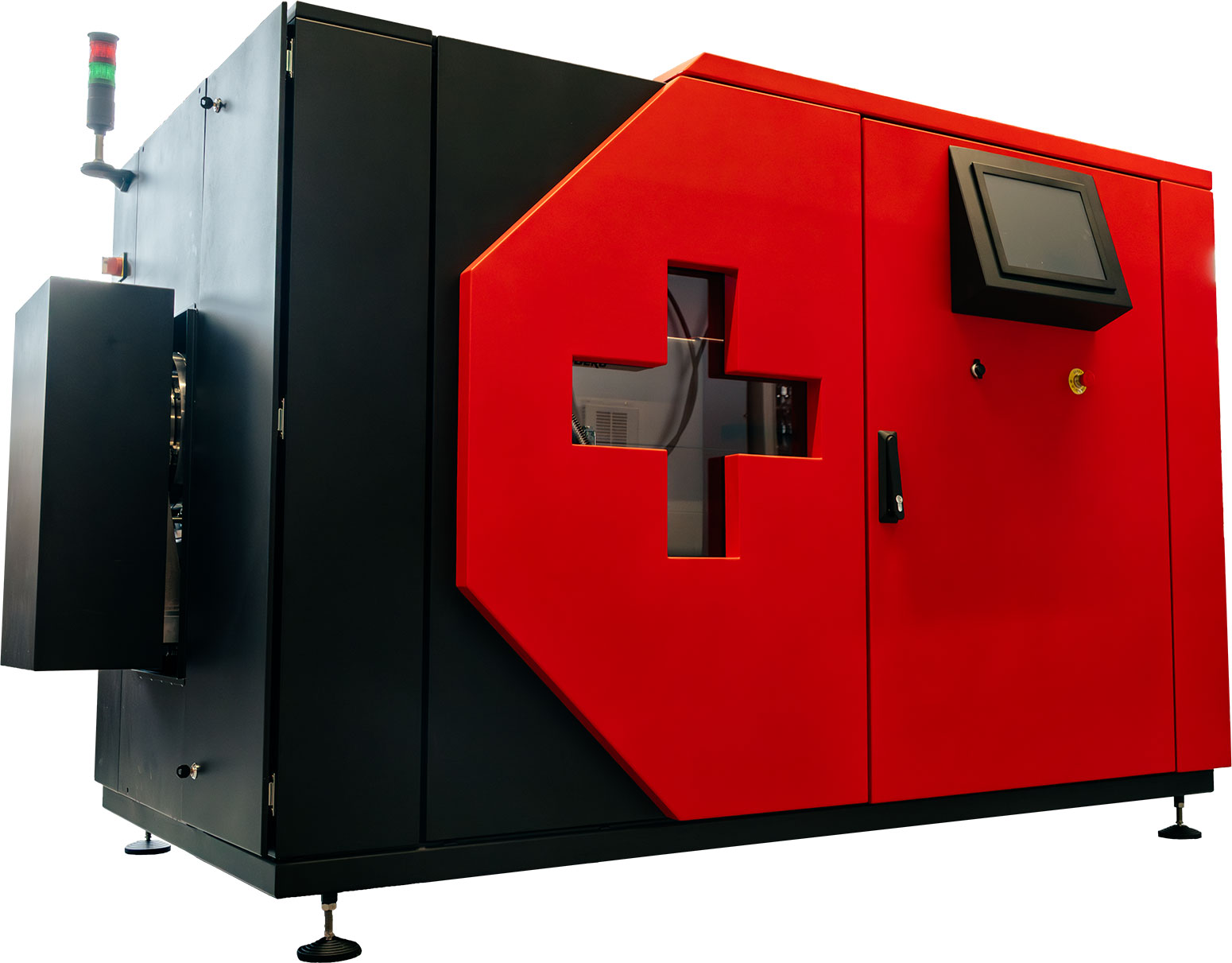
Sometimes, purchasing vacuum equipment starts with an exact part number. In that case, the requirement is straightforward. In other situations, a technical team knows which component needs to be replaced or which connection needs to be created, but still has to determine the correct configuration. This is where we can help. Rather than leaving your teams to compare parts based solely on product descriptions, we can discuss the installation and its requirements with you. Our objective is to understand what you need to connect and how the component will fit into the existing system.
This way of working comes directly from our engineering activity. When we create a customized vacuum system, our engineers begin by collaborating closely with the customer to understand the application. Mechanical requirements are considered as part of the complete project, and every system we manufacture is assembled and tested in-house by our vacuum technicians.
We apply the same practical reasoning when supplying individual vacuum components. Of course, ordering a CF flange is not the same as engineering an entire vacuum system. There is no reason to make a simple requirement unnecessarily complicated. But when compatibility is uncertain, access to people who understand complete vacuum installations can prevent a seemingly small purchasing decision from becoming a problem during assembly.
This can be especially valuable when modifying an existing system. Vacuum equipment can evolve throughout its operating life: instruments may be added, sections modified or components replaced. In these situations, the new flange must fit into an architecture that already exists rather than into an idealized system designed from scratch.
Our role is therefore deliberately practical. Tell us about the equipment, the connection concerned and your project. We can then work with your team to determine what is required and take care of the CF vacuum flange furniture and installation in Switzerland.
Supplying the correct CF vacuum flange is one part of the job. Integrating it correctly into the installation is another. Plasmadiam can support customers in Switzerland with both the supply and installation of CF vacuum flange components. This gives you continuity between component selection and its integration into the vacuum system.
Our technicians work directly with vacuum equipment. The systems developed by Plasmadiam are built and tested in-house, which gives our teams hands-on knowledge of assembly rather than purely theoretical familiarity with individual components.
For customers, this means that the discussion does not have to stop once a part has been selected. When installation support is required, we can continue through to the integration of the equipment.
This approach is particularly relevant when the flange forms part of a wider modification. Perhaps a connection has to be adapted, a section of the vacuum line is being changed or the project involves more than one component. Because our engineering expertise covers complete customized vacuum systems, we can look beyond the isolated flange when necessary.
Our experience in Switzerland spans more than 20 years of system construction. During that time, we have developed expertise that combines vacuum engineering with different technical disciplines, including coating, heating, testing and movement under vacuum. We also handle the mechanical, electrical and automation dimensions of customized projects when the application calls for them.
For a CF flange requirement, however, our priority remains focused: supply the component that fits the system and provide installation support when needed.
Whether your team already knows exactly which CF component is required or needs help identifying it, Plasmadiam provides a single technical point of contact in Switzerland. Want to know more? Contact us.
A CF flange is a vacuum connection commonly used for high and ultra-high vacuum applications. CF connections use mating flanges with knife edges and a metallic gasket between them. When the connection is tightened, the gasket is compressed to create the vacuum seal.
CF connections typically use copper gaskets. Unlike vacuum connections based on elastomer O-rings, the CF principle relies on a metallic seal compressed between the mating flange surfaces.
No. They are different connection systems. KF connections commonly use a centering ring with an elastomer seal and a clamp, making assembly and disassembly straightforward. CF connections use a metallic gasket compressed between bolted knife-edge flanges and are associated with more demanding high and ultra-high vacuum applications.
Start with the equipment already present in your installation and the connection you need to make. The dimensions and configuration of the existing flange must be identified accurately. The application and vacuum requirements should also be considered. If you are unsure, Plasmadiam can examine your requirements with you and help identify an appropriate component.
No. We work more broadly with vacuum systems and components. We have over 20 years of experience in system construction and our engineering teams design customized vacuum equipment according to individual customer applications.