



In today’s most demanding industrial and scientific environments, the ability to control and maintain a high vacuum has become a cornerstone of precision manufacturing and research. High vacuum systems are the silent backbone of innovation. At the crossroads of physics, automation and mechanical engineering, high vacuum system engineering requires both expertise and rigor, qualities that define Plasmadiam’s work for nearly two decades.
A high vacuum system operates within a pressure range where air and gas molecules are so scarce that their interactions with surfaces are drastically reduced. Typically, this environment is achieved when pressure drops below 10⁻⁵ mbar, allowing processes that would be impossible in atmospheric conditions.
Creating and maintaining such conditions involves more than simply extracting air. It requires a precise orchestration of mechanical components, sensors, control units and software, all functioning in harmony. Pumps, valves, chambers, gauges and control systems form the foundation, but their design and calibration determine performance.
High vacuum engineering begins with understanding the physics of gas behavior at low pressures, including molecular flow and surface adsorption. Each material and process introduces unique constraints: thermal expansion, outgassing, contamination risks and material compatibility with vacuum conditions.
Engineers must therefore design systems that minimize leaks, ensure proper sealing, and handle high-temperature or high-voltage applications when required. This is where the art of customization plays a crucial role, as every vacuum system must be engineered to match the exact parameters of its intended process.

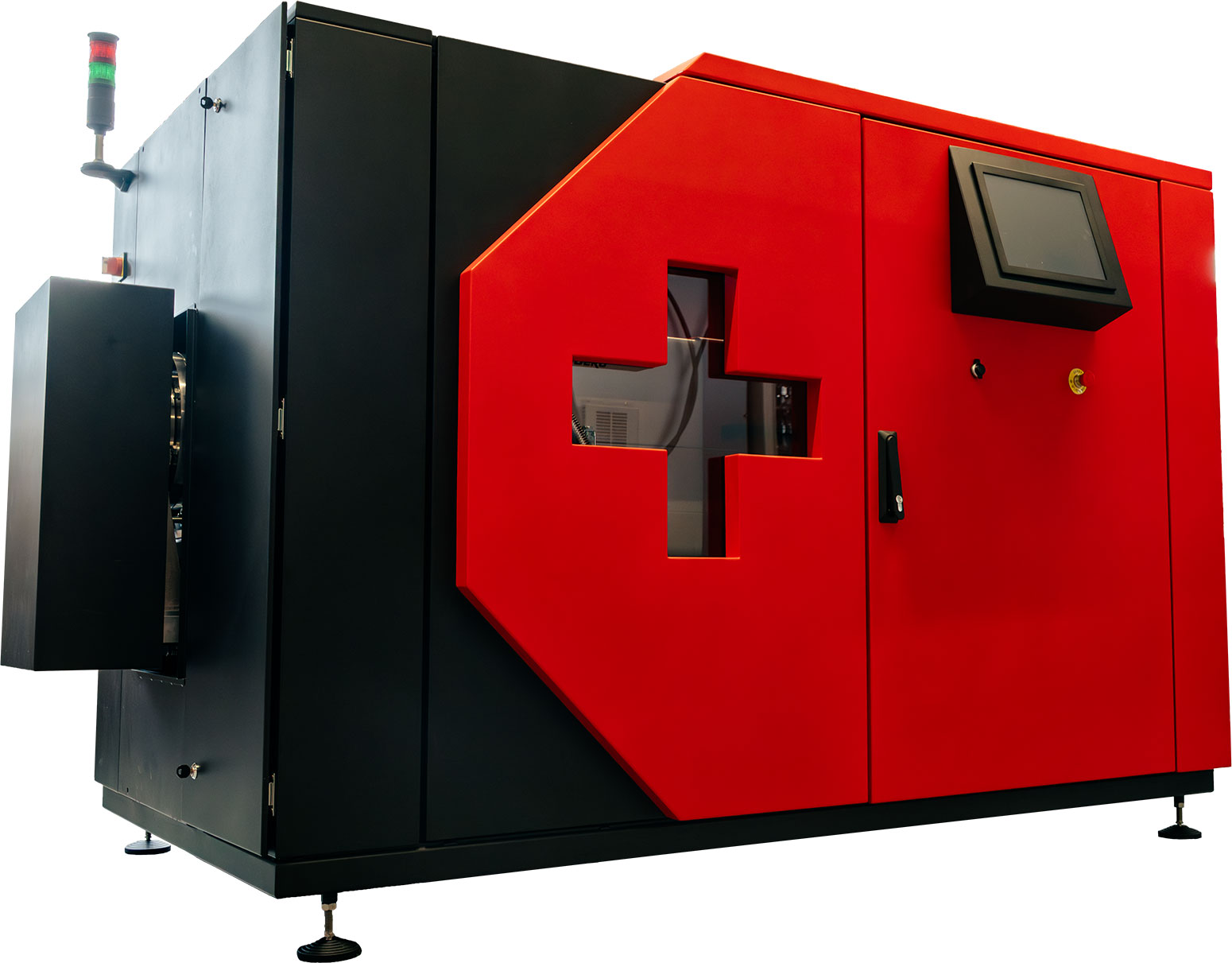
High vacuum systems are used across a wide spectrum of industries, from scientific research to high-tech manufacturing.
In coating applications, for example, thin film deposition relies on vacuum environments to ensure the purity and uniformity of coatings on metals, glass or semiconductors. The absence of air allows atoms or molecules to travel freely from a target material to the substrate, forming layers only a few nanometers thick.
In the testing field, vacuum systems simulate the conditions of outer space or high-altitude environments to evaluate material behavior under extreme conditions. This is essential in aerospace, energy, and defense sectors, where components must withstand radiation, vacuum, or temperature extremes.
Industrial heating processes also benefit greatly from vacuum conditions. Furnaces designed for high-temperature treatments, such as brazing, sintering, or annealing, require an oxygen-free atmosphere to prevent oxidation or contamination. High vacuum engineering ensures that thermal energy is distributed uniformly, improving both quality and efficiency.
Movement under vacuum is another specialized application area. In automated production lines or research setups, components often need to be transported or manipulated without breaking the vacuum. This demands precise motion control systems integrated into the chamber, a challenge that combines mechanics, electronics, and control engineering.
For each of these applications, the level of precision required goes far beyond standard industrial solutions. Engineers and researchers working with high vacuum systems depend on their reliability and on the expertise of a partner capable of designing systems that anticipate and solve complex technical constraints.
Located in Switzerland, Plasmadiam has established itself as a benchmark in high vacuum system engineering. With nearly two decades of experience, our philosophy is simple yet demanding: tailor every solution to the process it serves.
Our engineering team bring together experts in mechanical design, automation, software, and vacuum physics. This multidisciplinary approach allows us to design and manufacture complete systems, from small control modules to turnkey automation platforms.
Each project begins with a detailed requirements analysis. Our engineering department defines mechanical and electrical schematics, develops specifications and integrates control systems based on PLC programming and PID control loops. The result is a vacuum system that perfectly meets the performance targets.
Every system is fully assembled and tested by experienced vacuum technicians. This guarantees consistency, quality and reliability before delivery. Furthermore, Plasmadiam’s PLC and software engineers customize interfaces to make operation intuitive, allowing clients to monitor, visualize, record and archive process data easily.
For nearly twenty years, Plasmadiam has stood out by its flexibility and proximity to clients. Whether designing a laboratory-scale setup or an industrial automation system, the same attention to detail applies. This human dimension, the collaboration between engineers and clients, is at the heart of what makes Plasmadiam a trusted partner rather than just a supplier.
A high vacuum system creates a controlled environment where air and other gases are almost entirely removed. This is crucial for processes like coating, testing, and high-temperature treatments, where even trace gases can alter results or damage materials.
A high vacuum typically ranges between 10⁻³ and 10⁻⁷ mbar, while an ultra-high vacuum goes below 10⁻⁷ mbar. The latter is mainly used in advanced research fields such as surface physics or semiconductor manufacturing, where extreme purity levels are required.
Project timelines depend on complexity. A simple chamber with basic automation can be ready in a few weeks, whereas a complete turnkey system with multiple control loops, heating modules, and movement mechanisms may require several months of design and testing.
Because no two processes are identical. A custom system ensures optimal performance, safety and energy efficiency. It adapts to specific operational parameters, whether for research or production.
Yes. Beyond installation, Plasmadiam offers remote maintenance, data visualization tools, and ongoing technical assistance.
High vacuum system engineering is not only about creating a void; it is about enabling precision, repeatability, and innovation. Plasmadiam’s experience and commitment to tailored design make it an engineering partner that transforms complex requirements into high-performance systems built to last. When precision matters and reliability cannot be compromised, trust your custom vacuum system to Plasmadiam. Contact us to know more!