



In research laboratories and industrial development centers, controlling the working environment is not merely a technical. Among the physical parameters that scientists and engineers must master, pressure stands out as one of the most demanding. Creating and sustaining a vacuum environment requires a level of engineering precision that goes far beyond assembling off-the-shelf components. It demands a deep understanding of the underlying physics, a rigorous approach to system integration, and, above all, the ability to translate a researcher’s specific needs into a fully operational, custom-built solution. This is exactly what Plasmadiam has been doing for over two decades from its base in Switzerland : vacuum systems for Research & Development.
At its core, a vacuum system is designed to reduce the pressure inside an enclosed space well below atmospheric pressure. This is achieved by extracting gas molecules from a sealed chamber using one or more pumping technologies, each suited to a particular pressure range. From roughing pumps that handle the transition from atmospheric to medium vacuum, to turbomolecular and ion pumps capable of reaching ultra-high vacuum conditions, the choice of pumping strategy determines both the performance envelope and the complexity of the system.
Vacuum technology is categorized into several distinct regimes. Rough vacuum covers the range from atmospheric pressure down to around 1 mbar, while medium vacuum extends to approximately 10⁻³ mbar. High vacuum and ultra-high vacuum the latter reaching pressures below 10⁻⁷ mbar are typically required for the most sensitive scientific applications, such as particle physics experiments, surface science studies or the deposition of thin films with atomic-level precision.
What truly separates a functional vacuum system from an exceptional one is the intelligence built into its control layer. Modern vacuum for Research & Development rely on programmable logic controllers, sensor networks and software interfaces to maintain stable operating conditions, respond to process deviations and record experimental data with full traceability. This integration between the physical hardware and the digital control environment is where the most significant engineering challenges and opportunities reside.

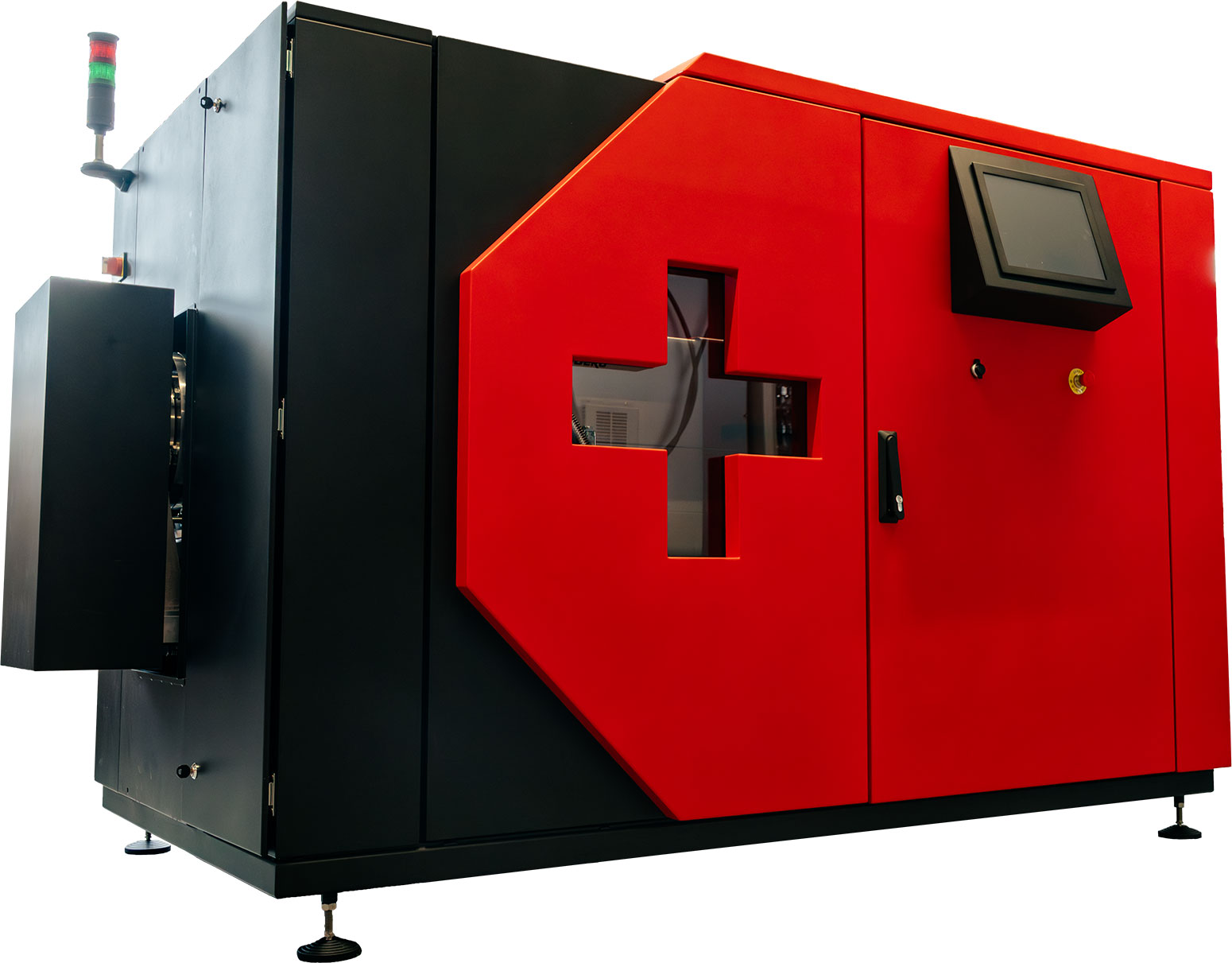
Research and development environments impose a very particular set of demands on vacuum technology. Unlike serial production facilities, where systems operate within fixed, well-defined parameters, R&D settings are inherently dynamic. Experiments evolve, protocols are revised, and new applications emerge (sometimes within the same facility, sometimes within the same year). A vacuum system for Research & Development must therefore be both technically robust and genuinely adaptable, and that’s where the expertise of Plasmadiam can be involved.
Founded and based in Switzerland, Plasmadiam has spent more than twenty years developing the kind of expertise that only comes from sustained, hands-on engagement with complex vacuum engineering challenges. The company specializes in the design, manufacture and commissioning of vacuum systems for Research & Development, built entirely to the client’s specifications.
From the first conversation, Plasmadiam’s engineers work directly with their clients to understand the specific demands of the application at hand. The goal is to arrive at a solution that is precisely calibrated to what the client actually needs, rather than a compromise between available standard products.
Plasmadiam’s particular strength is its ability to combine vacuum technology with adjacent engineering disciplines. Whether a project involves coating, heating, testing or movement under vacuum, the team is equipped to integrate these requirements into a coherent system.
The company’s service offer extends from compact control systems to fully turnkey automation solutions, covering the complete project lifecycle: from initial specification through design, manufacture, testing and commissioning. Remote maintenance capabilities are also part of the package, allowing Plasmadiam’s engineers to monitor system performance and intervene rapidly when needed.
Plasmadiam specializes in designing custom vacuum systems for research and development applications. These include systems for coating, heating testing, and movement under vacuum, designed and built entirely to the client’s specifications.
Each project begins with a requirements analysis carried out in close collaboration with the client. Plasmadiam’s engineering team then develops the mechanical and electrical architecture, writes the PLC programs, designs the HMI and oversees full in-house construction and testing before delivery.
Yes. PLC and software engineers at Plasmadiam can tailor the operator interface to the specific needs of the research team, including data visualization, process recording, archiving and links to external database systems.
Need a custom-designed vacuum system for Research and Development? Contact the Plasmadiam team now.